Anxiety is pervasive. Most of us experience a bit of it on a daily basis. Anxiety is anchored in fear, as well as an inability to accept uncertainty. We can’t accept that we don’t know how a situation will resolve, so we go into internal panic loops or cycles of overthinking.
For many people, anxiety is a much bigger challenge than the occasional stab of uncertainty and fear. Anxiety can be overwhelming and crippling. It can spawn physical ailments in our gut, heart, or muscular system. When anxiety is this intense, getting support from a licensed psychotherapist and a thoughtful open-minded psychiatrist is often advisable.
Anxiety is an apex emotion. It’s an emotion that shuts down other circuits of feeling. The moment anxiety strikes, it’s hard to think about anything other than the current object of your fear. But anxiety is often underpinned by other feelings. If we can get the anxious part of us to relax, other emotions rise to the service. Usually this wave of emotion is much more useful at giving us direction than the vortex of intense anxiety.
The roots of anxiety are often in trauma. We relive past trauma in the present when situations or emotions bring the older memory into awareness. Working with trauma requires intentional care with a therapist or coach who can help you unpack trauma at a pace that is manageable. Prominent therapy modalities are Eye Movement Desensitization Therapy (EMDR) and a newer technique called brainspotting. There are somatic coaches who can help you heal from trauma through rooting yourself in the body and feeling out where the trauma is lodged.
There are many mental health conditions that are often accompanied by anxiety. Depression for example is often aligned with anxious fear about the present and future. People living on the manic depressive spectrum often experience intense anxiety during the hypomanic and manic phases of the condition.
There are medications for anxiety. Some work quite well and are very fast acting, like benzodiazepines. Unfortunately, benzos can also by quite habit forming and can be dangerous if they are abused. For more long-term treatment of anxiety, psychiatrists often prescribe one of any number of antidepressants. These tend to work on the serotonin or norepinephrine neurotransmitter cycles and may offer some relief.
The fastest acting anti-anxiety drugs may be alcohol and nicotine–and both of these can end up killing you. Nicotine relieves anxiety initially for many people, but research demonstrates that over time it increases levels of cortisol, our brain’s stress hormone. This exacerbates anxiety over the long term.
Whether or not you use medication, it’s helpful to have some practical tools to turn to when anxiety strikes. Regulating our breathing is powerful. Some people respond well to slow steady breathing. Some people like box breathing: in for four, hold for four, out for four, hold for four.
For me, the most powerful tool is what I call polyvagal breathing–breathing out twice as long as you breathe in. So if you take a four count breathing in, you do an eight count breathing out. This activates the parasympathetic part of the polyvagal nervous system. This is sometimes called a state of “rest and digest.” You send a message to your brain that you are safe in the moment, that you can relax and ground. The vagus nerve is at the base of the human brainstem and helps regulate most of the body.
And our brains and our bodies are intricately interwoven. Grounding exercises can be powerful. Sitting in a chair or on a cushion you can imagine extending roots into the earth while exerting downward pressure on your thighs. A slow body scan can be helpful. In a body scan you usually lie comfortably and draw focused attention slowly from your toes through your whole body to your head. Stretching and yoga are also excellent physical tools for dealing with anxiety.
Another way to activate the parasympathetic nervous system and engage the body are half circles from one shoulder through your chest to the other shoulder. You breathe in at each shoulder and exhale for 7 counts as you move your head to the opposite shoulder. This is helpful, in part, because many of us carry our anxiety physiologically in the muscles that surround the spince
It is critical to recognize that pain shared is pain lessened. This is valuable when dealing with both anxiety and depression. One tool that can be beneficial is identifying what exactly is making you anxious, and exploring the issue or trigger with a therapist or trusted friend. Receiving positive reassurance from another person may lessen anxiety. Keeping a thought record and journaling about recurrent thoughts can also help us recognize patterns in your thinking and help address anxiety in the future.
We call this essay unmasking anxiety, because we believe that letting the deeper emotions to the surface is critical. Anxiety is often a manifestation of a part of ourselves that was traumatized, insulted or hurt. Our anxiety is still acting as if those threats are in our presence. If we can let the anxious part rest, other parts of our being come into alignment.
We often hear people say that what doesn’t kill you makes you stronger. This is often profoundly true for people with mental health challenges. When we reach out for support and learn tools grounded in mindfulness and somatics we gain skills that neurotypical people rarely need to acquire. We can transform our mental health struggles into superpowers that arm us to lead rich and full lives

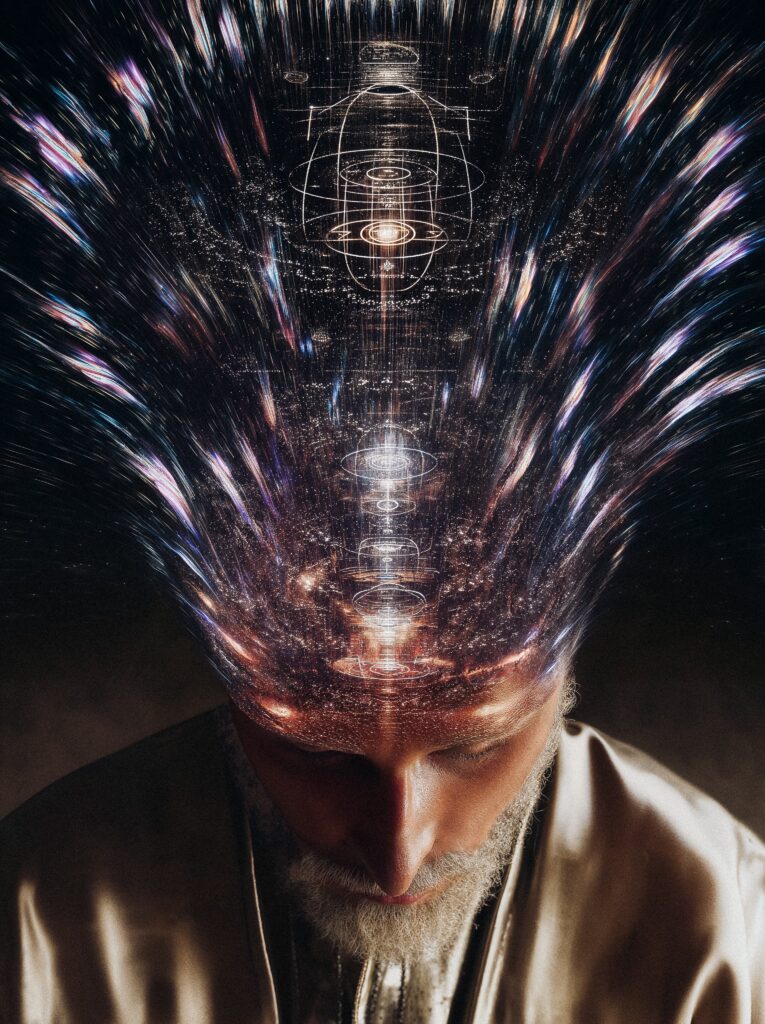
art by @miboso on X
–David Thurston and Tyler Young (2026)
Add a comment